

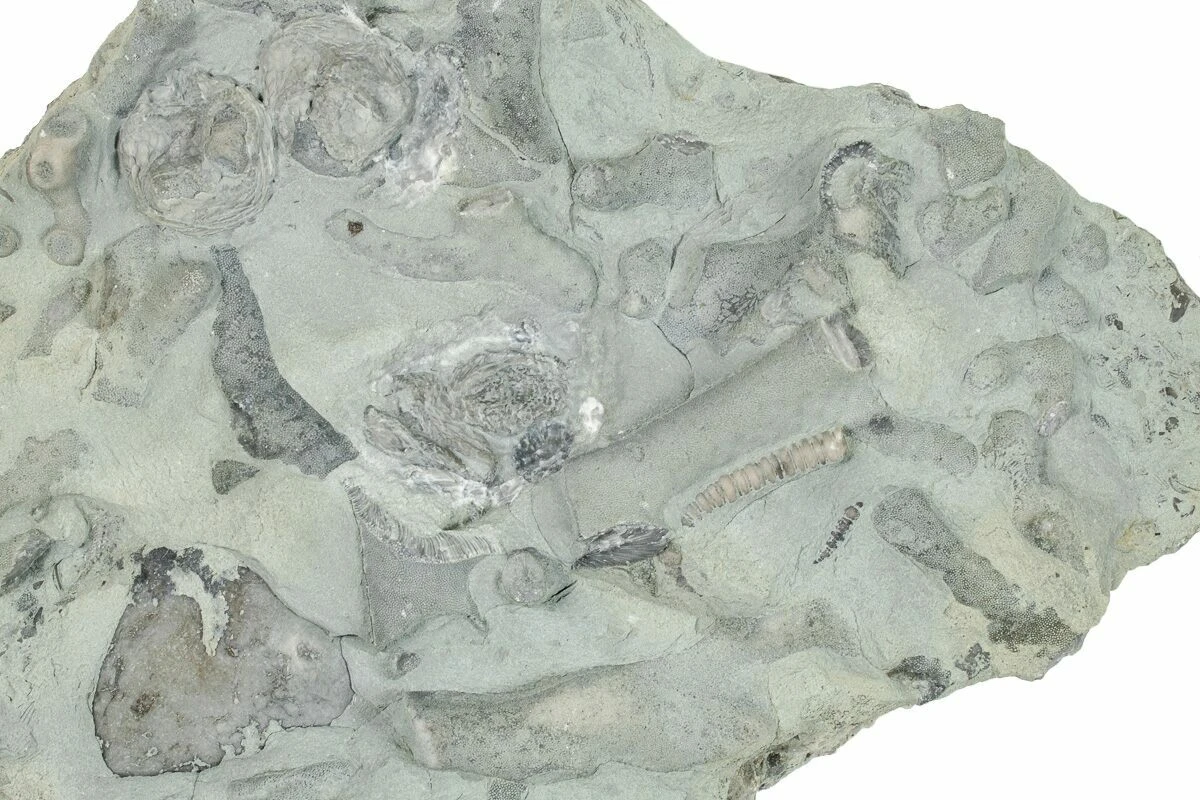
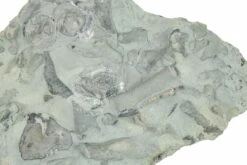
6.5″ Ordovician Fossil Edrioasteroid (Isorophus) Plate – Ohio
Original price was: $59.00.$41.30Current price is: $41.30.
- 100% High-Quality Guarantee
- Buy with Confidence, Get Quality
- The quality solution for all your needs.
- Unbeatable Quality Guaranteed

This is a 6.5″ wide plate of edrioasteroid (Isorophus sp.) fossils, collected from an Ordovician-aged marine deposit in Southern Ohio. The largest edrioasteroid measures .65″ wide and is naturally associated with several other fossils including two more edrioasteroids, crinoid stems, and coral.
It comes with an acrylic display stand.
Edrioasteroids were small organisms from a few millimeters to a couple centimeters wide. They look like a tiny cushion attached to a substrate. The mouth was in the center of the theca (body) and from it, five ridges radiate out in a pentaradial pattern. These ambulacra channel food along the body to the mouth. There is little fossil evidence of how this was done, but by looking at modern echinoderms, it is likely Edrioasteroids had cilia or tube feet along the ambulacra that moved the food to the mouth. The ambulacra radiate out from the mouth in either straight lines, or curving to form a whorl. Usually they all curve in the same direction, but in a few species they curve in different directions.
| SPECIES | Isorophus sp. |
|---|---|
| AGE | Ordovician |
| LOCATION | Southern Ohio |
| SIZE | Largest Edrioasteroid: .65" wide, Rock: 6.5 x 4.5" |
| CATEGORY | Echinoderms |
| SUB CATEGORY | Edrioasteroid Fossils |
| ITEM | #270107 |
Be the first to review “6.5″ Ordovician Fossil Edrioasteroid (Isorophus) Plate – Ohio”
Related products




Echinoderms

Reviews
There are no reviews yet.