

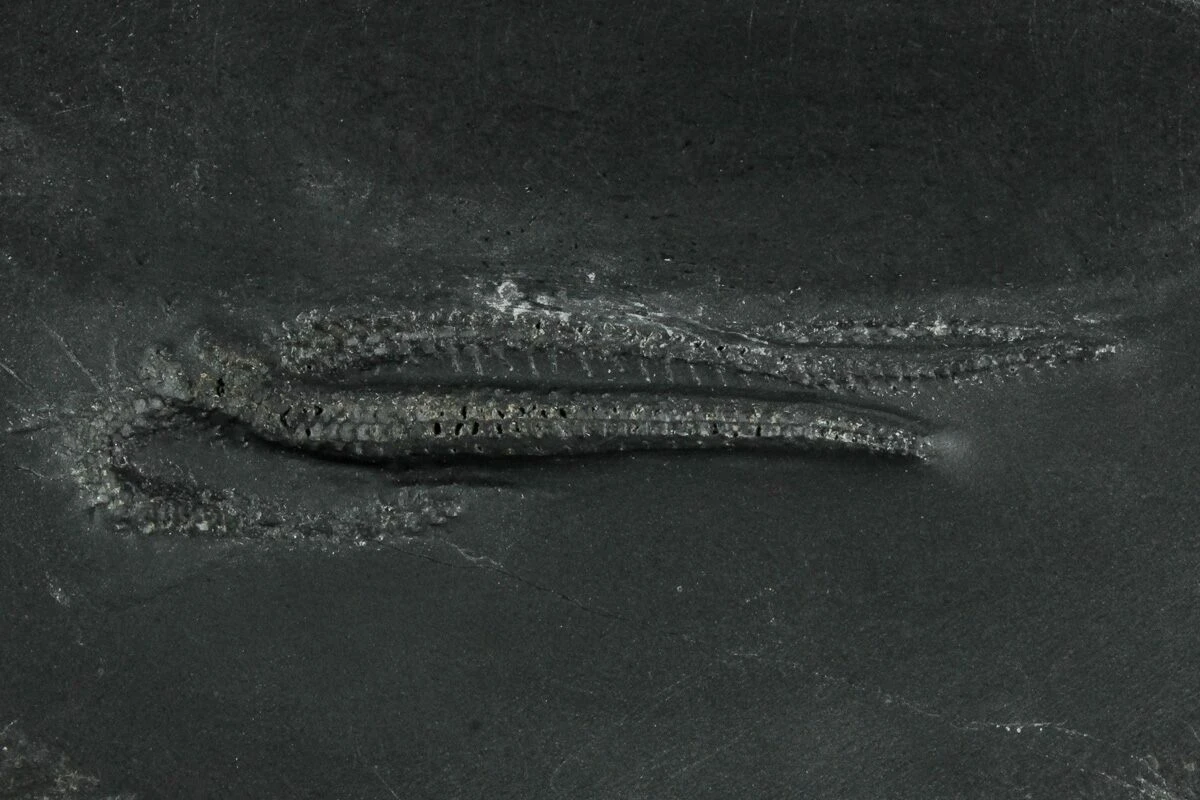
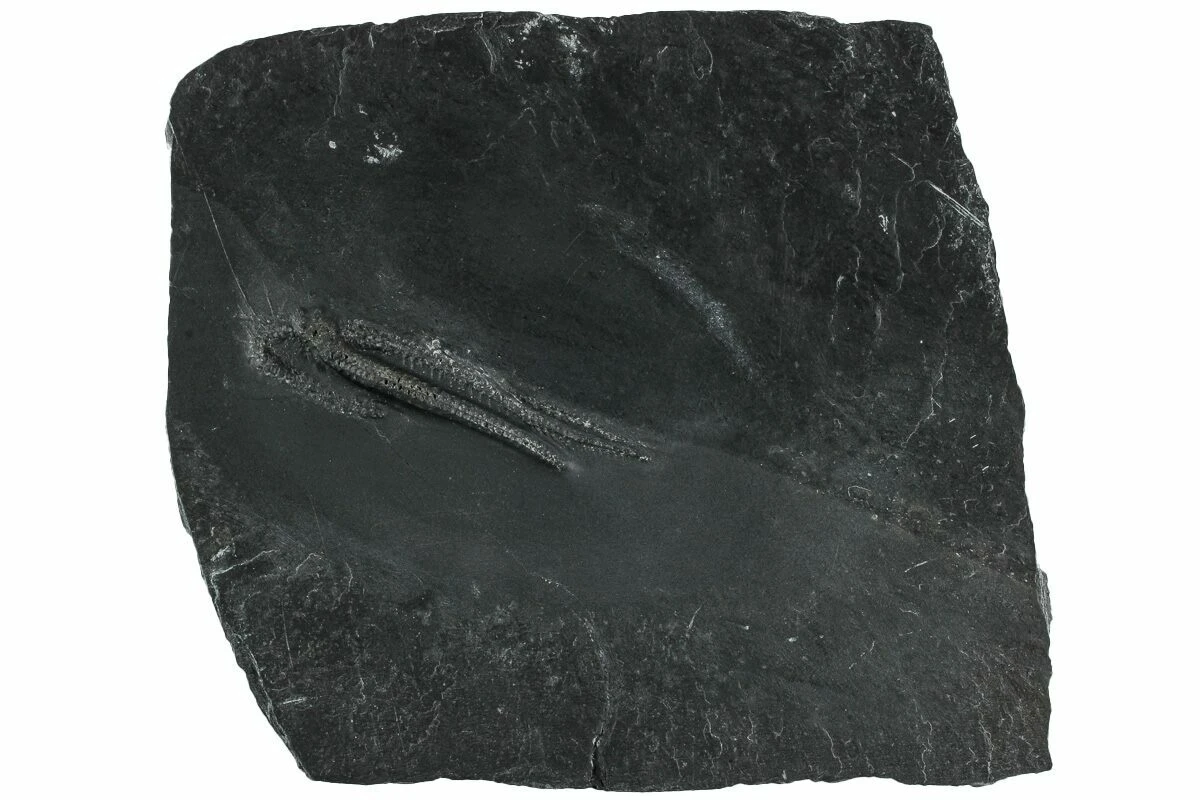
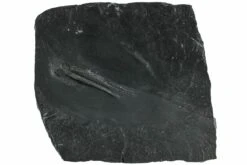
1.25″ Pyritized Brittle Star (Ophiurina) – Bundenbach, Germany
Original price was: $215.00.$96.99Current price is: $96.99.
- 100% High-Quality Guarantee
- Buy with Confidence, Get Quality
- The quality solution for all your needs.
- Unbeatable Quality Guaranteed

This is a 1.25″ wide pyritized brittle star (Ophiurina lymani) from the Hunsrück Slate of Germany. All of the organic material has been replaced by pyrite and there is some disarticulation of the arms.
It comes with an acrylic display stand.
The lower Devonian (lower Emsian) slates from Bundenback have been quarried for roofing material for centuries. Quarrying continued until the 1960s, when the competition from cheaper synthetic or imported slate resulted in production decline. The last pit closed in 2000. Mining of Hunsrück slate was important for the discovery of Paleozoic fossils. Although not rare, fossils can only be found through extensive mining and time-consuming preparation: fossils are hard to see lying under the surface of dark slate. But in 1970, Wilhelm Stürmer, a chemical physicist and radiologist, developed a new method to examine the Hunsrück slate fossils using medium energy X-rays.
The Bundenbach “Hunsruck Slate” is famous for yielding one of the most important assemblages of Paleozoic fossils, representing 260 animal species including mollusks, echinoderms and arthropods, of which the phacopid trilobite Chotecops is certainly the most abundant.
| SPECIES | Ophiurina lymani |
|---|---|
| AGE | Lower Devonian (Emsian Stage) |
| LOCATION | Bundenbach, Germany |
| FORMATION | Hunsrück Slate |
| SIZE | Brittle Star: 1.25" wide (longest measurement), 8.9 x 6.2" slate |
| CATEGORY | Echinoderms |
| SUB CATEGORY | Starfish & Brittle Star Fossils |
| ITEM | #231554 |
Be the first to review “1.25″ Pyritized Brittle Star (Ophiurina) – Bundenbach, Germany”
Related products






Reviews
There are no reviews yet.